
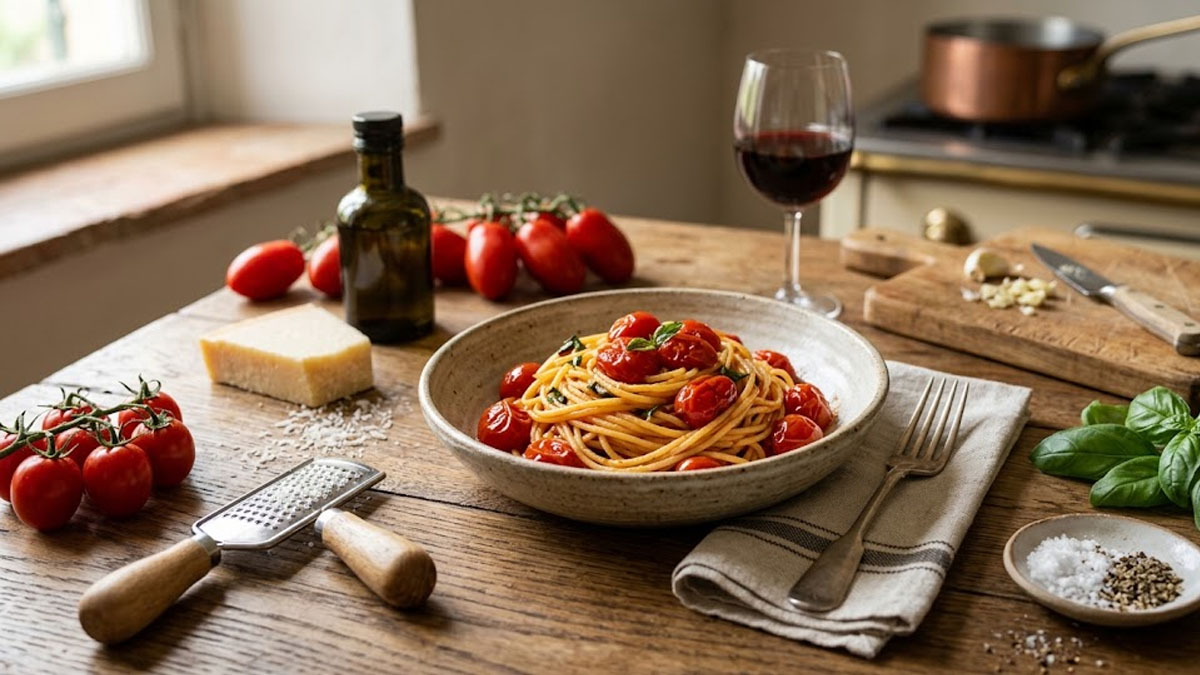
You do not need a culinary degree, rare vintage olive oil, or a copper pot shipped directly from Tuscany to make unforgettable Italian food. In fact, if you watch an Italian home cook prepare dinner, you will notice something surprising: their kitchens are often remarkably uncomplicated. They do not use dozens of spices, complex marinades, or multi-step modern techniques. Yet, a basic five-ingredient pasta dish coming out of a modest Italian kitchen consistently tastes richer, fresher, and more balanced than a complex recipe from an upscale fusion restaurant.
The secret behind this magic isn’t a hidden trick or a secret ingredient. It is a fundamental philosophy—a single golden rule that governs Italian cuisine from Piedmont down to Sicily.
What Is the “Golden Rule” of Italian Cooking?
The core principle of authentic Italian cuisine can be summarized in three words: Respect the Integrity of the Ingredient (L’esaltazione dell’ingrediente).
In many Western styles of cooking, the goal is often layering complexity—adding multiple sauces, spices, and seasonings until a new, complex flavor compound is formed. Italian cooking operates in the exact opposite direction. Its primary goal is subtraction and elevation.
Instead of asking, “What else can I add to make this taste better?”, an Italian chef asks, “What can I remove so that the primary ingredient shines as brightly as possible?”
When you adopt this mindset, cooking shifts from a chaotic experiment into a clean, disciplined art. When a dish relies on only three or four components, every single component must be handled with purpose.
Why Modern Home Cooks Get It Wrong
Most people who try to recreate classic Italian dishes at home fall into the trap of over-complicating things. Have you ever made a pasta sauce and felt something was missing, so you kept adding garlic powder, dried oregano, sugar, heavy cream, and extra cheese?
By doing this, you are actually drowning out the natural flavors of the produce.
When you heavy-handedly add dried herbs and heavy creams to a simple tomato sauce, you obscure the sweet, bright acidity of the tomatoes. When you overload a Carbonara with garlic and heavy cream, you mask the rich, porky flavor of the guanciale and the sharp tang of Pecorino Romano.
The simple rule states: If an ingredient does not explicitly serve to highlight the hero element of the dish, leave it out.
Rule #1: The Power of Seasonal Simplicity (La Materia Prima)
Because Italian dishes rely on so few elements, the quality and seasonality of those elements—known as la materia prima—do all the heavy lifting.
If you make a Caprese salad in the middle of winter using pale, waterlogged tomatoes from a supermarket, no amount of salt or expensive olive oil will make it taste amazing. But if you make that same salad at the height of summer with ripe, sun-warmed heirloom tomatoes, a leaf of sweet basil, fresh mozzarella, and a pinch of sea salt, it becomes a world-class meal.
To apply this rule in your daily life:
- Buy tomatoes when they are in season; use canned whole San Marzano tomatoes when they are not.
- Choose extra virgin olive oil that smells like fresh-cut grass, not neutral cooking oils.
- Always grate whole blocks of cheese right when you need them rather than using pre-shredded packaged cheeses, which are coated in anti-caking agents.
Rule #2: Salt the Water, Save the Starch
One of the most practical applications of the simple Italian philosophy involves how pasta itself is treated. Pasta is not just a delivery vehicle for sauce; it is an active component of the overall flavor profile.
Two simple habits will immediately elevate your pasta:
1. Salt your boiling water generously. The water should taste noticeably salty, like sea water. This is your only opportunity to season the interior of the pasta dough itself. Unsalted pasta will always taste bland, no matter how seasoned your sauce is.
2. Embrace the starchy pasta water. Before draining your pasta, scoop out half a cup of the cooking liquid. When you toss your hot pasta into a pan with your sauce and add a splash of this starchy, salty liquid, something miraculous happens. The starch emulsifies with the fats (oil or butter), creating a smooth, glossy sauce that clings perfectly to every noodle rather than pooling at the bottom of your bowl.
Rule #3: The Rule of Three Main Flavors
Look at almost any iconic Italian dish, and you will notice a common pattern: they rarely highlight more than three dominant flavor notes at once.
- Cacio e Pepe: Black pepper, Pecorino cheese, pasta starch.
- Margherita Pizza: Sweet tomato, creamy mozzarella, fresh basil.
- Pasta aglio e olio: Garlic, olive oil, red chili flakes.
- Pesto Genovese: Basil, pine nuts/cheese, olive oil.
When you limit a dish to three primary elements, there is nowhere for low-quality ingredients or sloppy technique to hide. Each flavor stands distinct, yet together they form a harmonious balance of fat, acid, salt, and heat.
How to Apply the Rule Tonight
You don’t need to completely overhaul your pantry to start cooking better Italian food today. Simply pause before you start cooking your next meal and run through this quick mental checklist:
- Identify the hero: What is the main flavor focus of this meal? (e.g., the sweet tomatoes, the earthy mushrooms, or the rich pork?)
- Strip away the noise: Remove any secondary herbs, dried spice blends, or heavy sauces that compete with or hide the hero element.
- Focus on technique: Instead of adding extra seasonings, focus on properly searing your meat, blooming your garlic gently in warm olive oil without burning it, or properly seasoning your cooking water.
By shifting your focus from adding more to doing less, but doing it better, your everyday home cooking will instantly taste cleaner, brighter, and effortlessly authentic.